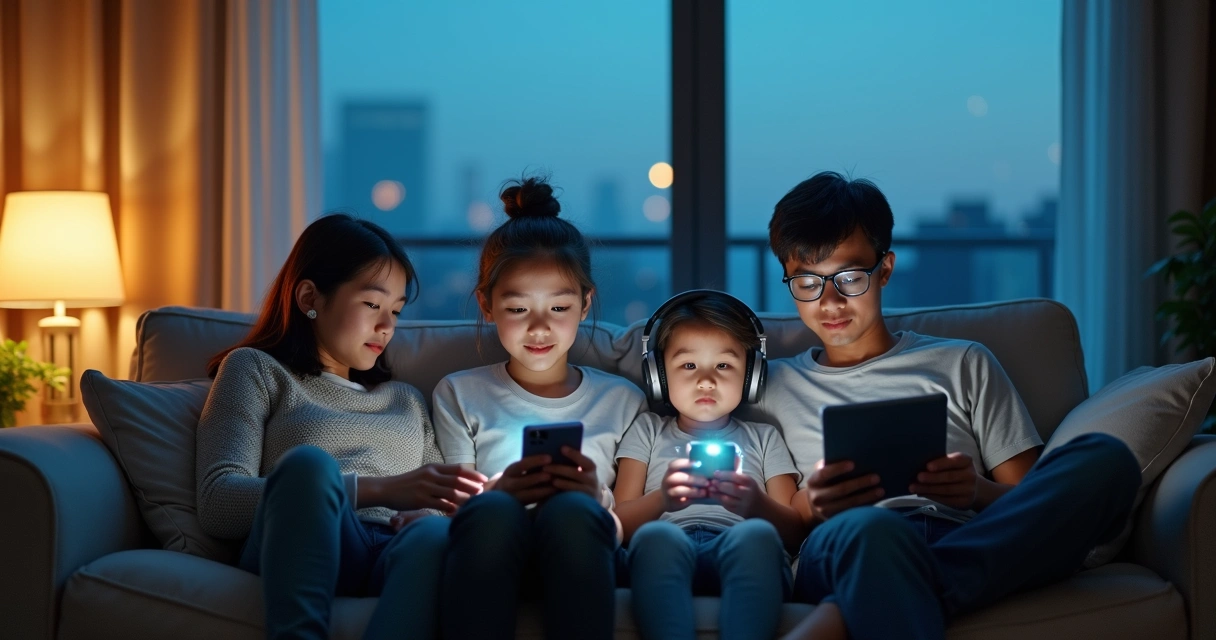
We live in a time of constant contact. Messages arrive fast. Reactions appear in seconds. Video calls reduce distance, yet many people still feel unseen. This tension matters when we think about emotional attunement, which is our ability to sense, receive, and respond to another person with presence and fit.
Emotional attunement is not just contact. It is contact with depth, timing, and felt recognition.
In our view, digital life does not harm attunement by itself. The real issue is systemic. Every device enters a field of relationships. It changes rhythm, attention, expectation, and even how we read silence. A family dinner with four phones on the table is not only a set of individual choices. It is a shared emotional environment.
We have all seen small moments that say a lot. A child speaks while a parent checks a notification. A partner sends a serious message and waits hours, watching the screen for signs of care. A friend posts a hard day online, receives many icons, and still goes to sleep alone with the same ache. The signal was sent. The bond did not fully happen.
How digital systems reshape emotional exchange
Emotional attunement depends on cues. Tone, pause, facial tension, posture, breath, and timing all matter. Digital communication reduces or edits many of these cues. We still connect, but we connect through filters of format and speed.
When cues shrink, interpretation grows.
This is why short texts can create large misunderstandings. A delayed reply may mean work, fatigue, fear, or simple distraction. Yet many people read it as rejection. In digital spaces, the mind often fills gaps with old emotional material. Past wounds, family habits, and relational insecurity can all enter the blank spaces left by screens.
We also notice a shift in tempo. Digital life trains quick scanning, fast replies, and split attention. Emotional attunement asks for something else. It asks us to stay long enough to register what is happening in ourselves and in the other person. These two rhythms do not always match.
- Fast platforms reward immediate reaction.
- Attunement asks for a measured response.
- Algorithms favor intensity and novelty.
- Relationships grow through repetition, steadiness, and repair.
When a whole group lives inside this faster rhythm, emotional habits change. People may become more reachable and less available at the same time. That contradiction is now common.
Fast contact can hide thin connection.
What research suggests about digital and in-person support
Recent findings help us see this pattern with more clarity. A longitudinal study using momentary assessments over three years found that meaningful computer-mediated interactions, such as messaging, were linked to lower affective well-being and higher loneliness when compared with face-to-face interactions. We think this does not mean messaging has no value. It means the medium shapes the emotional outcome.
Another large survey of adults ages 30 to 70 strengthens this point. Research on emotional support and loneliness showed that low real-life emotional support had a much stronger link with loneliness than low support through social media. In combined models, real-life support remained the stronger protective factor.
Digital contact may supplement care, but it does not replace the regulating power of embodied presence.
This matters for couples, families, teams, and friend groups. If a system slowly trades embodied contact for digital maintenance, emotional depth may weaken even when message volume rises.

Why attunement weakens online
We see a few repeating mechanisms. They are simple, but their effects can spread through whole relationships.
First, there is fragmentation of attention. If we read a message while doing five other things, we may answer the content but miss the feeling. Second, there is emotional compression. Complex states get reduced to short phrases, emojis, or silence. Third, there is performative exposure. Some people share feelings in public spaces without receiving the grounded response that private care would offer.
There is also the issue of nervous system co-regulation. In person, our bodies read one another. We slow down with calm people. We tense around abrupt energy. A screen can carry voice and image, but it carries less of the full regulatory field.
- Presence becomes thinner when attention is divided.
- Misreading rises when context is missing.
- Repair gets delayed when conflict stays in text form.
We think many digital conflicts are not only about what was said. They are about what could not be sensed.
Where digital life can still support connection
We should not treat digital life as the enemy. It can support attunement when used with intention. A thoughtful voice note can carry warmth. A video call can help family members stay connected across distance. A timely message can prevent isolation from deepening during a hard day.
The difference lies in use, pace, and honesty about limits.
Digital tools work better for emotional attunement when they extend a real bond instead of trying to substitute for it.
We have seen this in ordinary ways. A sibling sends a calm message before a difficult appointment. A partner says, “I cannot answer well right now, but I care and I will come back tonight.” A friend chooses a call instead of a string of unclear texts. These acts are small. Still, they protect the bond because they reduce ambiguity.

Practices that protect emotional attunement
In our experience, people do better online when they agree on simple relational norms. This lowers projection and builds trust.
- Name the medium that fits the moment. Some topics need a call, not a text.
- Signal delay with care. A brief note can prevent stories of abandonment.
- Create device-free zones during meals, meetings, or intimate talks.
- Use voice and video when nuance matters.
- Return to face-to-face contact whenever possible after tension or rupture.
These are not rigid rules. They are supports for a healthier field. They help us keep technology in its place, as a tool inside relationship, not as a replacement for relationship.
Conclusion
The systemic impact of digital life on emotional attunement is not only about screens. It is about how screens reshape attention, timing, expectation, and the emotional field between people. We think the task is not withdrawal from digital life, but maturation inside it. When we choose slower presence, clearer signals, and embodied contact where possible, we protect the human capacity to feel with one another instead of merely reacting to one another.
That shift can begin in very small acts. One less distracted reply. One honest pause. One conversation moved from text to voice. Sometimes that is enough to change the tone of a whole system.
Frequently asked questions
What is emotional attunement in digital life?
Emotional attunement in digital life is the ability to sense and respond to another person with care through digital channels. It includes timing, tone, clarity, and presence, even when people are not physically together.
How does technology affect emotional attunement?
Technology affects emotional attunement by changing how we send and receive emotional cues. It can support contact, but it can also reduce context, split attention, and increase misreading when messages replace richer forms of interaction.
Can digital tools improve emotional connection?
Yes, digital tools can improve emotional connection when they are used with intention. Voice notes, video calls, and clear messages can support closeness, especially across distance, if they build on an existing bond and do not replace deeper contact for long periods.
What are risks of digital emotional detachment?
Risks of digital emotional detachment include shallow contact, rising loneliness, more projection, delayed repair after conflict, and reduced sensitivity to emotional nuance. Over time, people may feel connected in volume but disconnected in depth.
How to maintain emotional attunement online?
We can maintain emotional attunement online by matching the medium to the moment, being clear about delays, using voice or video for sensitive topics, setting device-free times, and returning to in-person contact whenever possible after stress or misunderstanding.